Paperback
Available
ISBN
9781065863441
Price
25.99 CAD
Rediscovering Meaning, Ethics, and Human Flourishing in a Disrupted World
Can technological and material progress sustain humanity without meaning, ethics, and purpose?
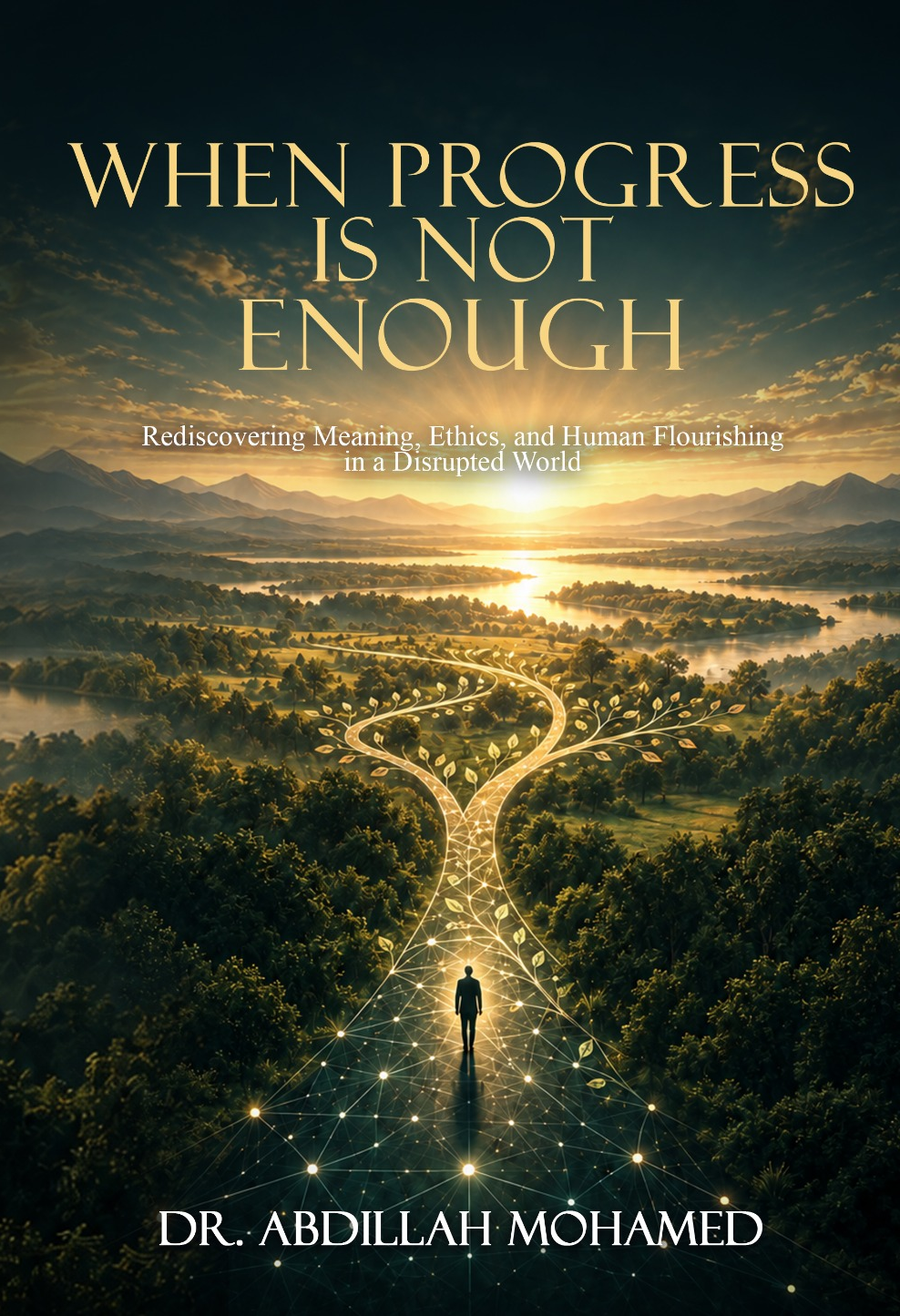
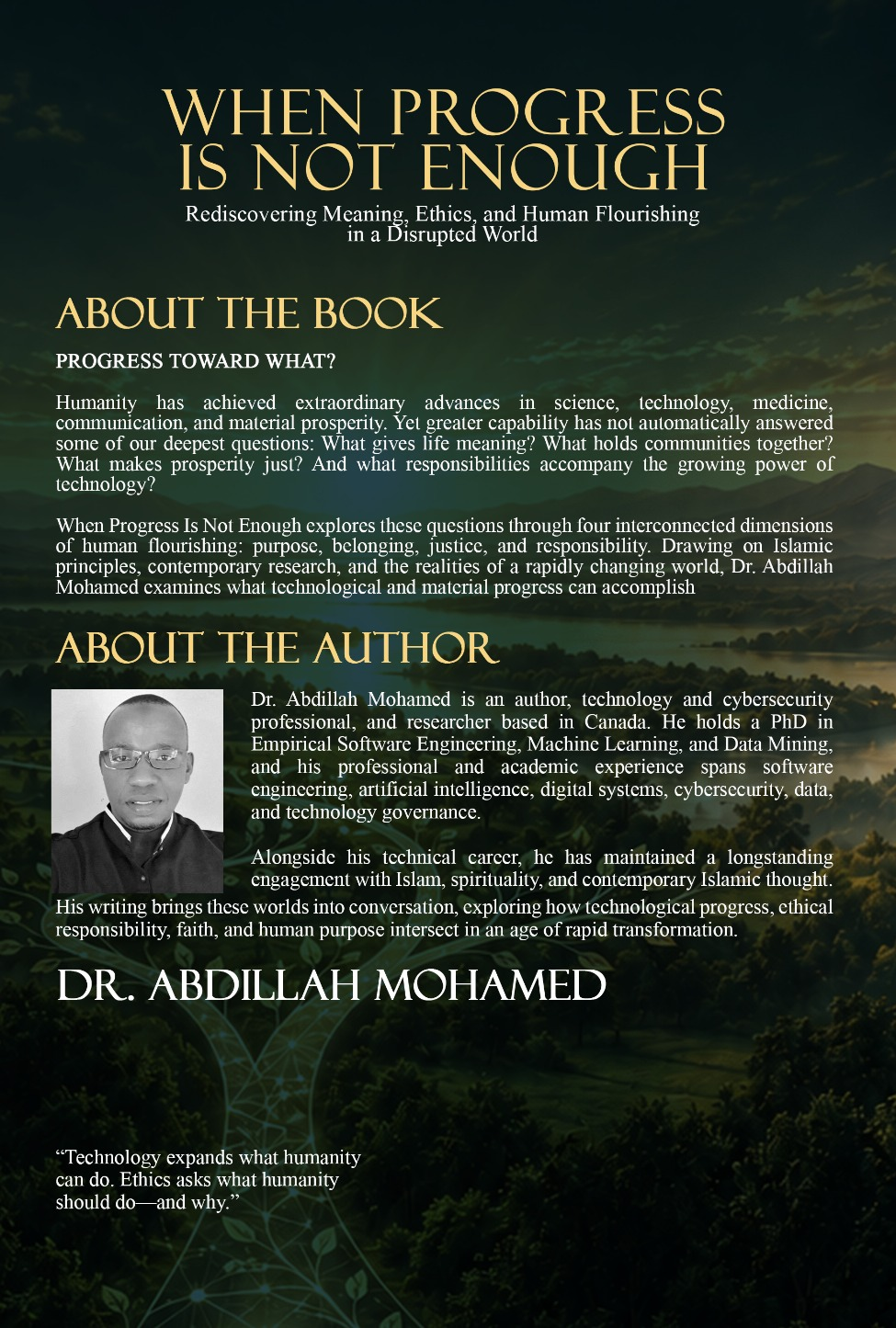
Select a cover to read it. Click the image to enlarge.
What happens when humanity gains more knowledge, wealth, power, and technology—yet continues to struggle with loneliness, inequality, uncertainty, and the search for meaning?
We live in an extraordinary age of innovation. Artificial intelligence is transforming industries, scientific discoveries are reshaping our understanding of the world, and technology is connecting billions of people. Yet beneath these remarkable achievements lies a profound question: Are we truly becoming better human beings, or simply more powerful ones?
In When Progress Is Not Enough, Dr. Abdillah Mohamed invites readers to reconsider what progress really means and whether technological advancement, economic prosperity, and material success are sufficient to create a meaningful and fulfilling life.
Drawing on contemporary research, philosophical reflection, psychology, sociology, economics, technology, and ethical principles, this thought-provoking book explores the growing distance between what humanity is capable of achieving and what human beings genuinely need to flourish.
FOUR DIMENSIONS OF HUMAN FLOURISHING
Meaning and Purpose — Discovering what gives life direction, cultivating gratitude, resilience, inner peace, and a deeper sense of personal responsibility.
Human Connection and Belonging — Rediscovering the importance of family, relationships, community, compassion, and the bonds that give human life meaning.
Economic Justice and Shared Prosperity — Examining inequality, ethical finance, fairness, exploitation, and the responsibility to build economic systems that uphold human dignity.
Ethical Responsibility and Stewardship — Reflecting on artificial intelligence, surveillance, automation, climate change, environmental sustainability, and the moral responsibilities that accompany human power.
This book is not an argument against science, innovation, economic development, or technological advancement. Rather, it challenges us to examine their deeper purpose.
Technology can expand what we are capable of doing. But can it tell us what is worth doing?
Economic growth can increase prosperity. But can it guarantee justice, dignity, and fulfillment?
Digital connectivity can bring the world closer together. But can it replace genuine human connection?
Through accessible analysis and thoughtful reflection, Dr. Mohamed invites readers to look beyond conventional measures of success and embrace a more balanced vision of progress—one that places human dignity, compassion, justice, ethical responsibility, and meaningful living at its center.
Written for curious minds, professionals, educators, policymakers, students, and anyone questioning the direction of modern civilization, When Progress Is Not Enough offers a timely perspective on the relationship between human achievement and human well-being.
Because the greatest challenge of our time may not be how much further humanity can advance, but whether we possess the wisdom to guide that advancement toward a better future.
The deeper question is not simply how far humanity can progress, but what kind of human beings our progress is helping us become.
Available formats and purchasing options for When Progress Is Not Enough. Availability is updated as each edition is released.
What gives human life meaning when achievement, comfort and capability are not enough?
How can technological connection become genuine community, relationship and mutual responsibility?
What should prosperity mean when wealth, opportunity, risk and economic power are distributed unequally?
How should growing technological and environmental power be governed by stewardship and accountability?
The book is written for readers interested in technology, ethics, spirituality, society, economics, artificial intelligence, environmental responsibility, and the future of human flourishing. No prior specialist knowledge of Islam is required.